Munich City Pass

Attractions with the Munich City Pass

With the Munich City Pass you get free entry to over 40 museums, palaces and sights in Munich, plus the hop-on-hop-off city bus tour.

from €55.90

Buy Munich City Pass
Attractions with the Munich City Pass
Table of Contents

Free entry, not just a discount

The Munich City Pass covers admission outright: at the included sights you pay nothing at the ticket desk, you simply show the QR code on your phone and walk in. Over 40 attractions are covered this way, plus the hop-on-hop-off city bus tour. You can visit each attraction once with the City Pass, a second visit to the same place isn't possible. If you'd rather pay for each admission separately and get discounts instead, the Munich Card is the better fit.

Fast Lane access at select attractions only

Priority entry isn't available everywhere. At the Deutsches Museum and the FC Bayern Museum at the Allianz Arena you get in via the Fast Lane; at the other attractions you join the regular queue and simply save on admission. Some guided tours also need to be booked in advance, and the details come with your digital pass.

What isn't included

Not every well-known Munich attraction is included in the City Pass. The BMW Museum, Hellabrunn Zoo and the Olympic Tower aren't covered, so you pay the regular admission there. Public transport isn't automatically included either - it's a paid upgrade for Zone M or the full M-6 network; see public transport for how it works. Alongside free admission, there are discount partners such as restaurants, shops and tour operators where you get a discount rather than free admission.

Planning your pass days

The pass is valid for 1 to 5 consecutive days from the start date you choose at booking; it can't be paused or extended. So choose the length of your pass around the sights that matter most to you, and check their opening hours and closing days in advance. It's also worth grouping the attractions outside the old town into one day, such as the Allianz Arena in Fröttmaning and Bavaria Filmstadt in Geiselgasteig.

New Town Hall (Glockenspiel)

The New Town Hall on Marienplatz has been Munich's neo-Gothic landmark and seat of the city administration since 1905. The 85-metre-high town hall tower with its world-famous glockenspiel draws thousands of visitors every day.

The spectacular glockenspiel with 43 bells and 32 figures re-enacts the historic Schäfflertanz (coopers' dance) and a medieval knights' tournament every day. From the viewing platform in the tower you get a breathtaking panoramic view over the whole city of Munich.

Frauenkirche (Cathedral of Our Lady)

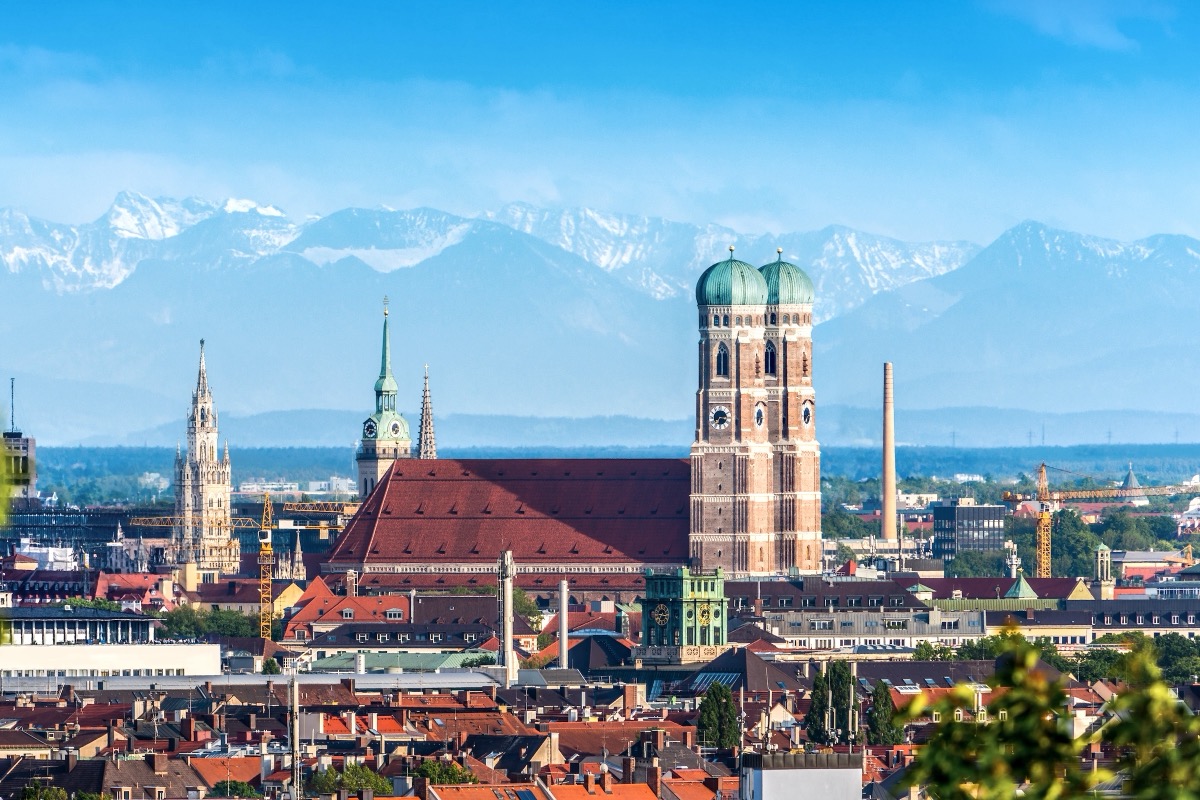
The Frauenkirche is an imposing late-Gothic brick cathedral and one of Munich's best-known landmarks. Its distinctive twin towers with green domed caps have shaped the city skyline for centuries.

The towers, at almost 99 metres, still dominate the Munich skyline today - no building in the city centre is allowed to be taller. Since 2022 the south tower has been open as a viewing point, offering a spectacular panorama over Munich as far as the Alps.

Nymphenburg Palace

Nymphenburg Palace is one of the grandest baroque palace complexes in Europe and served as the summer residence of the Wittelsbach dynasty from 1664. With a frontage of 632 metres, it ranks among the largest royal palaces on the continent.

The lavish state rooms, such as the Great Hall and the famous Gallery of Beauties, are architectural masterpieces. The palace park, covering more than 200 hectares with canals, lakes and rococo pavilions such as the Amalienburg hunting lodge, attracts around 300,000 visitors a year.

Munich Residenz

The Munich Residenz was the city residence of the Bavarian dukes, electors and kings from 1508 to 1918. With more than 130 rooms open to visitors, it is the largest inner-city palace in Germany.

The Residenz Museum impresses with lavishly furnished audience chambers, ceremonial halls and court chapels. Highlights include the 69-metre-long Antiquarium, the largest Renaissance hall north of the Alps, as well as the Treasury with more than 1,200 works of art and the magnificent Cuvilliés Theatre.

Deutsches Museum

The Deutsches Museum on Museum Island is the world's largest museum of science and technology. With around 28,000 objects from roughly 50 fields of science and technology, it holds a truly unique collection.

From historic steam engines and early aircraft to spacecraft and nuclear reactors, the museum fascinates 1.5 million visitors a year. Interactive experiment stations and live demonstrations bring science and technology to life for visitors of all ages.

Alte Pinakothek

The Alte Pinakothek, which opened in 1836, ranks among the most important painting galleries in the world. It presents around 700 masterpieces of European painting from the Middle Ages to the 18th century.

Highlights include Albrecht Dürer's self-portrait from 1500 and the world's most extensive collection of Rubens, with 72 paintings. Works by Raphael, Rembrandt and Titian are also on display, along with the only painting by Leonardo da Vinci in Germany.

Allianz Arena & FC Bayern Museum

The Allianz Arena is an architectural landmark and modern football stadium seating around 75,000 spectators. It's famous for its glowing exterior facade of almost 3,000 air-filled LED panels, which light up in different colours depending on the occasion.

The adjoining FC Bayern Museum is Germany's largest club museum, presenting the record champion's more than 100-year history across 3,000 m², complete with every trophy and title.

Pinakothek der Moderne

The Pinakothek der Moderne brings together four museums for art, graphic design, architecture and design under one roof. It's one of the largest exhibition spaces for modern and contemporary art in Europe.

Across roughly 12,000 m² of exhibition space, it showcases highlights of 20th- and 21st-century art, from works by Pablo Picasso and Andy Warhol to architecture and design icons by Le Corbusier.

Sea Life Munich

Sea Life Munich in the Olympiapark is a fascinating large aquarium that opened in 2006. It's home to around 2,500 aquatic animals from about 260 species and offers unique underwater experiences.

A particular highlight is Germany's largest variety of sharks, with around 20 different species, including blacktip reef sharks and zebra sharks. The glass underwater tunnel through the 400,000-litre ocean tank lets visitors get up close to sharks, rays and sea turtles.

Bavaria Filmstadt

Bavaria Filmstadt in Geiselgasteig is a unique film studio park offering exclusive behind-the-scenes access to the world of film and television. On the roughly 90-minute tour, visitors experience German filmmaking up close.

Highlights include original filming locations and sets from well-known productions such as Das Boot, Fack ju Göhte and Jim Button. A 4D experience cinema and interactive attractions - where visitors can even star in film scenes themselves in front of the camera - round off the experience.

The Munich City Pass covers entry to these attractions; at the Deutsches Museum and the FC Bayern Museum you also get in via the Fast Lane. Opening hours and the languages available for guided tours may vary.

Are your top sights included?

Then get the Munich City Pass for your travel days and show the QR code straight at the ticket desk.